BBL Speaker Series: Cynthia Bennett: Exploring Responsible AI for Audio Description
Talk Title: Exploring Responsible AI for Audio Description
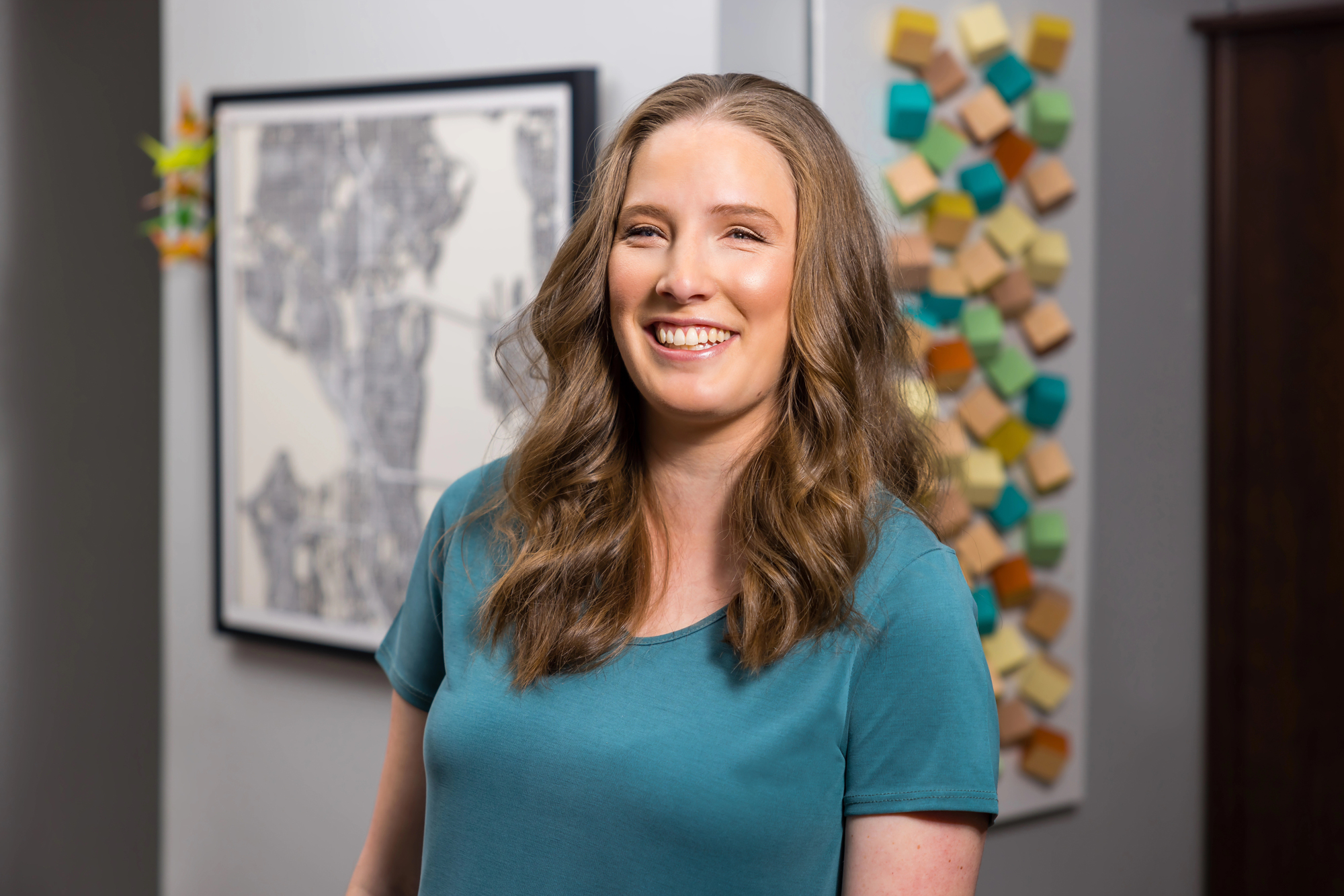
Speaker: Cynthia Bennett, Staff Research Scientist, Google Research.
Location: IRB 4105 and Zoom
Abstract: Audio description (AD) narrates important visual details which are played during dialogue gaps in video soundtracks, making them accessible to blind and low vision (BLV) audiences. Videos rarely include AD, particularly those created and posted by end users on social media, which make up a growing segment of entertainment media and information access. Generative AI may aid in the scaled creation of AD, offering accessibility at a rate that outpaces humans’ abilities to fund and develop AD. AD professionals (producers, writers, narrators, mixers, and quality control specialists) possess expert knowledge of AD development and the constraints that affect their work. Yet, as enthusiasm to apply AI to solve longtime accessibility challenges mounts, perspectives from AD professionals who have intimate knowledge of AD development processes remain largely absent in AD research. In this talk I will share two projects. In the first, we interviewed 17 AD professionals, both BLV and sighted. I will share how they do their work, and evolutions in AD practice from BLV user advocacy. I will share how the increased usage of AI in AD pipelines is impacting them and their concerns about AD quality despite promises that AI can scale AD development. The second project dials into leveraging genAI to address a particular pain point in AD development. BLV AD professionals have struggled to gain traction and recognition as many tools and processes in AD development are inaccessible, and people have misconceptions about BLV professionals’ ability to contribute to AD development. Our system, ADCanvas, leaves editorial control with the user while providing visual descriptions of scenes and script writing assistance, when requested by the user. Through ADCanvas, I will show how automation can enhance accessible work practices, while presenting it in tension with trends in automation which complicate the ethics of automation even when intended usage preserves user agency.
Bio: Dr. Cynthia Bennett is a Staff research scientist at Google Research. Her research is about making technology-mediated experiences, such as those leveraging generative AI, accessible to and representative of people with disabilities while mitigating harmful applications. Prior, Bennett was a researcher at Apple and a postdoctoral Research Fellow at Carnegie Mellon University, after receiving her Ph.D. in Human Centered Design and Engineering from the University of Washington. Bennett’s research has been recognized with awards from top professional organizations, including the 2025 Skip Ellis Early Career Award from the Computing Research Association. She is also a disabled woman scholar committed to raising participation of people with disabilities in the tech industry.